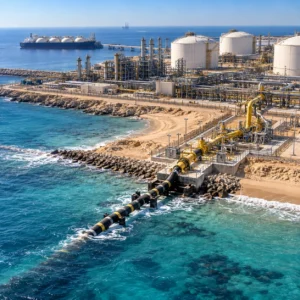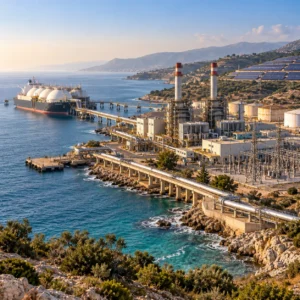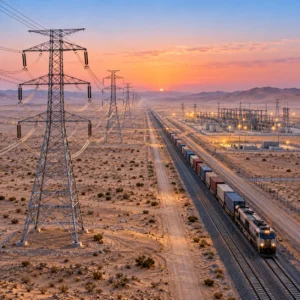
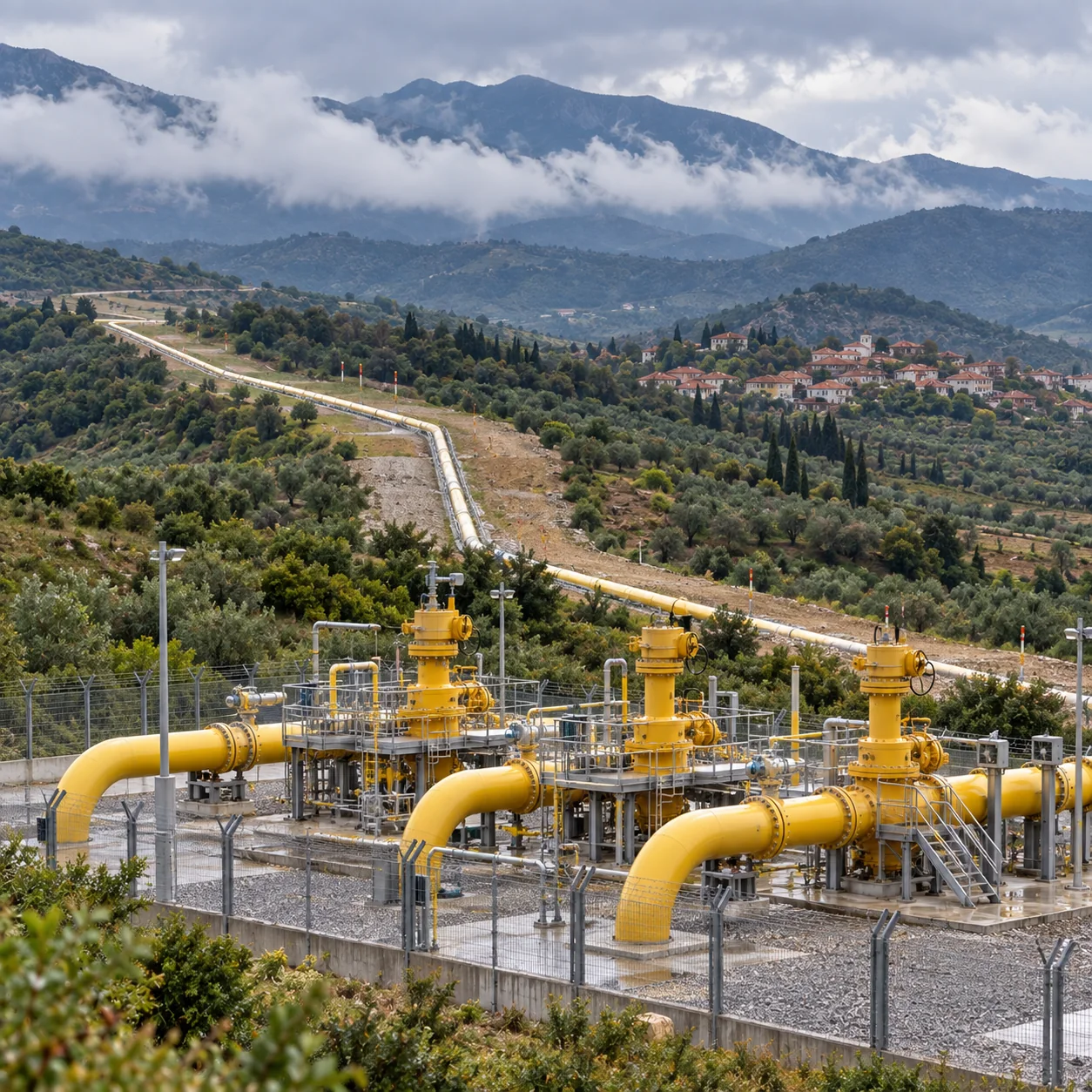
Abu Dhabi now owns a piece of Europe’s southern gas gateway.
On September 15, XRG, the international investment arm of ADNOC, completed its acquisition of a 12.5% stake in Southern Gas Corridor CJSC. It bought the stake from Azerbaijan’s Ministry of Economy once all conditions precedent and regulatory approvals had been satisfied, according to Energy Intelligence and World Pipelines.
Southern Gas Corridor is more than one pipeline. The company holds interests in the Shah Deniz gas and condensate field, the South Caucasus Pipeline, the Trans Anatolian Pipeline and the Trans Adriatic Pipeline, plus shares in Azerbaijan Gas Supply Company. The network runs about 3,500 km from the Caspian Sea through Georgia and Türkiye to Southern Europe, and it can carry up to 26 billion cubic metres of gas a year.
For a Gulf producer, that is a different kind of energy security asset.
From Gas Fields to the Route to Market
The deal adds to positions XRG had already built around the Caspian. According to Gulf News, the company holds a 30% interest in Azerbaijan’s Absheron gas and condensate field and a 38% participating interest in Turkmenistan’s offshore Block I. Block I produces around 400 million cubic feet a day and holds more than 7 trillion cubic feet of resources.
Until September 15, those were resource positions. The Southern Gas Corridor stake gives XRG equity in the export infrastructure that takes Caspian gas to buyers.
Mohamed Al Aryani, President of International Gas at XRG, called the completion “a defining step in the development of XRG’s integrated Caspian strategy.” He said that by combining gas resources in Azerbaijan and Turkmenistan with strategic export infrastructure, XRG is “building a resilient platform that connects advantaged supply with growing regional and European demand.”
Supply and route together is the model the major international gas players have used for decades. A Gulf national oil company is now building it outside the Gulf.
Diversification Now Means Owning Routes, Not Just Barrels
Gulf energy security has usually been measured by how much a country can produce and whether it can ship that output through a few maritime chokepoints. In a year when the Strait of Hormuz has dominated risk discussions across the region, that framing has limits.
A stake in a Caspian pipeline system earns revenue from gas that never passes through Gulf waters. Energy Intelligence notes that the transaction gives ADNOC downstream exposure to European gas markets and upstream participation in one of the region’s most important gas developments. It also extends the company’s strategy of diversifying beyond its home market through its overseas vehicle.
That changes the risk profile of the whole portfolio.
A producer that holds assets on several supply routes is less exposed to disruption on any single one. A buyer that deals with a supplier present on several routes has more options too. For a Gulf exporter whose output has been concentrated geographically, this is resilience bought with capital.
Europe Gains a Well Capitalised Partner
The deal benefits more than one side. Southern Europe gets gas from the corridor through the Trans Adriatic Pipeline, and the infrastructure has become a fixture of Europe’s effort to widen its sources of supply.
An Abu Dhabi shareholder adds a long-term investor with experience of operating large gas systems. Gulf News describes the deal as part of efforts to strengthen route-to-market access and deepen UAE-Azerbaijan energy ties. Azerbaijan gains a partner with capital and gas expertise. XRG gains access to European demand without building new infrastructure from scratch.
What does a Gulf company bring to a Caspian pipeline?
What does a Caspian pipeline bring to a Gulf company?
The answer to both is diversification that each side would struggle to build alone.
What Industry Should Take From the Deal
For developers, lenders and pipeline operators, the transaction points to several shifts in how MENA energy capital is being deployed:
- National oil company capital is moving into midstream infrastructure abroad, not only upstream acreage.
- Equity in pipelines is being used as a hedge against maritime route risk.
- Integrated positions that pair resources with export routes are becoming the preferred structure.
- Gulf investors are becoming long-term counterparties for European supply infrastructure.
- Bilateral state relationships are turning into shareholdings in physical assets.
None of this replaces the Gulf’s own export capacity. It adds another layer to it.
The Next Test Is Making the Platform Work as One
Buying the assets is the first step. Running them as an integrated business is harder.
XRG now holds positions in Azerbaijani production, Turkmen offshore gas and the pipeline network linking the Caspian to Southern Europe. Turkmenistan’s Block I sits on the eastern side of the Caspian, while the corridor’s pipelines start on the western side. How XRG links its upstream positions to the export network it now partly owns will show how far the integrated Caspian strategy can go.
Execution will matter in other ways too. Pipeline equity pays off through steady throughput, sound governance with other shareholders and good relations with transit countries. Those are long-term commitments, and they will test whether Gulf national oil companies can run as international gas portfolio managers as well as producers.
The direction is clear. Gulf energy majors are no longer content to sell molecules at the edge of their own coastline. They want a stake in the routes those molecules travel.
For decades, Gulf energy security meant protecting the routes out of the Gulf. XRG is extending it to owning routes well beyond it.