Egypt’s gas hub ambition just picked up a new supplier.
On 20 October 2026, Egypt’s Ministry of Petroleum and Mineral Resources and Chevron initialed a financial framework agreement to connect Cyprus’s Aphrodite gas field to Egyptian gas infrastructure. The document was initialed in Alexandria, with Egyptian Petroleum Minister Karim Badawi and Cyprus Energy Minister Michael Damianos both present, according to Egypt Oil and Gas.
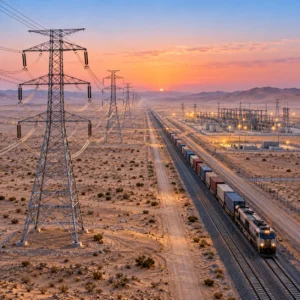
On the same day, Eni announced the start-up of Meleiha Phase 2 in Egypt’s Western Desert, a gas processing plant designed for up to 100 million standard cubic feet per day.
Taken together, the two announcements show a country working both ends of the supply problem: more gas from its own fields, and more gas arriving from its neighbours.
A Fiscal Framework Is the Unglamorous Step That Unlocks Capital
The agreement was initialed by Mohamed El-Bagoury, head of the petroleum ministry’s central legal affairs department, and Javier La Rosa, Chevron’s President of Base Assets and Emerging Countries. It sets the financial and commercial terms for a planned link between the field and Egypt’s gas system.
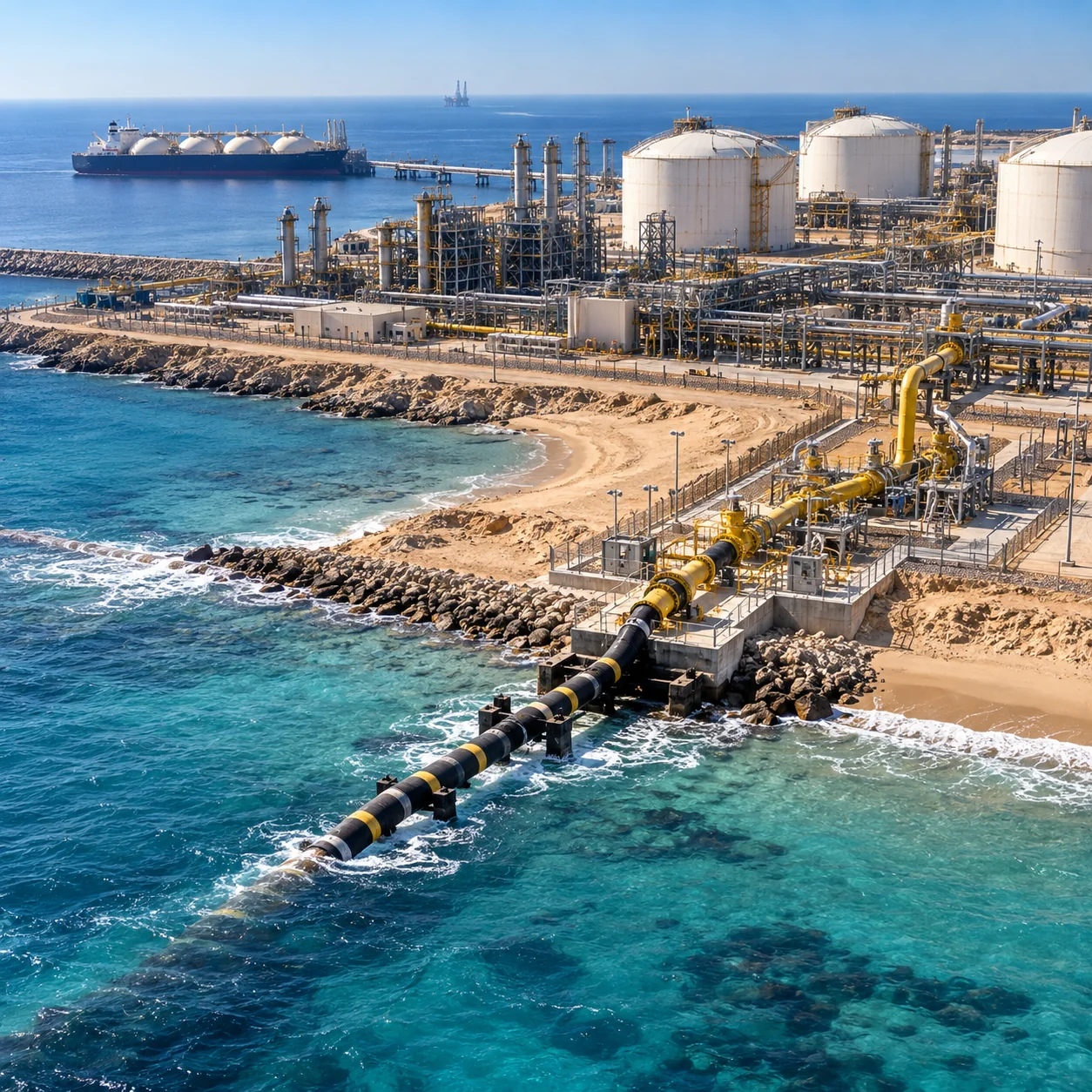
Under that link, Aphrodite gas could be used in Egypt’s domestic market or processed and liquefied for export, depending on demand and project economics, according to Offshore Engineer.
That flexibility matters.
Cross-border gas projects rarely stall on geology. They stall on tariffs, tax treatment and who carries which risk. The fiscal framework is the piece that turns a technical concept into something a board can price. It builds on a 15-year binding term sheet signed in April with Egyptian Natural Gas Holding Company for the sale of all recoverable gas from the field, and on a broader Egypt and Cyprus gas cooperation agreement signed in March.
Aphrodite Brings Scale and a Clear Route to Market
Aphrodite sits in Block 12 of Cyprus’s exclusive economic zone. Chevron operates the field with a 35% stake, alongside Shell with 35% and NewMed Energy with 30%, according to Offshore Engineer. Shell agreed in July to sell its Cyprus unit, including the Aphrodite interest, to Hungary’s MOL, subject to approvals.
The development plan uses a floating production facility and a subsea pipeline to Egypt. Egypt Oil and Gas puts the facility’s maximum capacity at about 800 million cubic feet per day and the estimated development cost at about $4 billion. The ministry expects a final investment decision in 2027 and first gas around 2030 to 2031.
A Chevron spokesperson told Baird Maritime the project is in front-end engineering and design work ahead of a potential final investment decision.
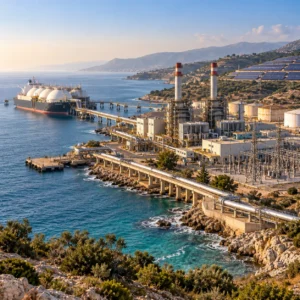
The route to market is the real advantage. Egypt already owns LNG export terminals at Idku and Damietta, which gives Cyprus a way to commercialise offshore gas without building its own liquefaction plant. Damianos described regional cooperation as essential for East Mediterranean resources, given the offshore complexity, high capital needs and infrastructure required.
Meleiha Shows Domestic Supply Is Moving Too
Imports through a hub only work if the hub’s own system is healthy. That is why the Meleiha start-up deserves attention alongside the Aphrodite headline.
Eni launched Meleiha Phase 2 through Agiba Petroleum, its joint venture with the Egyptian General Petroleum Corporation. The project includes new development wells, gathering networks, trunklines, the processing plant and a dedicated export pipeline into existing infrastructure, according to Inspenet. Eni describes the hub as having annual capacity of around 1 billion cubic metres.
It fits a wider push. Badawi said in Alexandria on 20 October that Egypt brought 591 new wells into production and made 113 discoveries between July 2024 and June 2026. The ministry also says it settled about $6.1 billion in outstanding dues to international partners over two years, a step that directly improves the investment case for new drilling.
His stated priority for the next phase is moving from discoveries to production, and from investment opportunities to commercially viable partnerships.
What the Hub Model Means for Investors and Operators
Egypt is building a system where domestic fields, Cypriot fields and existing liquefaction capacity reinforce one another. Eni and TotalEnergies already took a final investment decision on the Cronos field offshore Cyprus in July, with output of about 2.8 million tonnes per year of LNG equivalent targeted from 2028, according to Egypt Oil and Gas. Gas from Cronos and Aphrodite would flow through subsea links into Egyptian infrastructure.
For the industry, that creates clear opportunities:
- Subsea pipeline and floating production contracts as Aphrodite moves through engineering
- Higher utilisation of Idku and Damietta liquefaction trains
- Processing, compression and gathering work in the Western Desert
- Long-term supply options for European buyers seeking non-Gulf routes
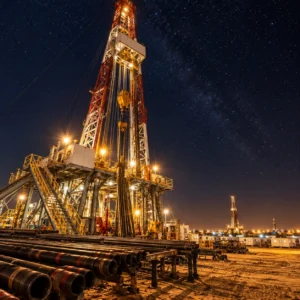
- Service and drilling demand as Egypt converts discoveries into producing wells
- Shared infrastructure models that lower the cost of smaller offshore fields
For buyers, the attraction is diversity. LNG leaving the Egyptian coast reaches Europe without passing through the Strait of Hormuz, a route question that carries far more weight in 2026 than it did a few years ago.
The Next Milestones Will Decide the Pace
Several steps remain. The ministry describes the framework as part of the financial, commercial and regulatory arrangements needed to move the project forward. Ahead of a final investment decision, Badawi met Chevron executives in Athens on 8 October to review the remaining technical, commercial and legal requirements, including the procurement of long-lead items, according to Egypt Oil and Gas. The Shell sale to MOL also needs to close.
None of these is unusual for a project of this size. Each is a box that commercial gas projects have to tick.
What has changed is the direction of travel. Egypt now has agreed sales terms, an agreed fiscal framework and a neighbouring field already sanctioned. Its own upstream is adding new processing capacity in the Western Desert.
Energy security in the East Mediterranean will not come from a single giant field. It will come from connecting many fields to the infrastructure that already works.