Lebanon may finally have a credible plan to keep its lights on.
On October 16, Qatari Prime Minister Sheikh Mohammed bin Abdulrahman Al Thani pledged in Beirut to help rehabilitate Lebanon’s electricity sector, AP reported. Days later, a draft blueprint seen by Reuters and reported by Asharq Al-Awsat on October 20 set out what that help could look like: two new 825 MW combined-cycle gas plants and a 20 year LNG supply agreement with QatarEnergy, backed by new solar, wind and battery storage.
The plan still needs approval from both governments and may change. Even so, it is the most complete proposal for Lebanon’s power system in years.
And it treats the problem the right way: as an energy security problem, not just a generation shortfall.
A Plan Built Around Fuel, Not Just Megawatts
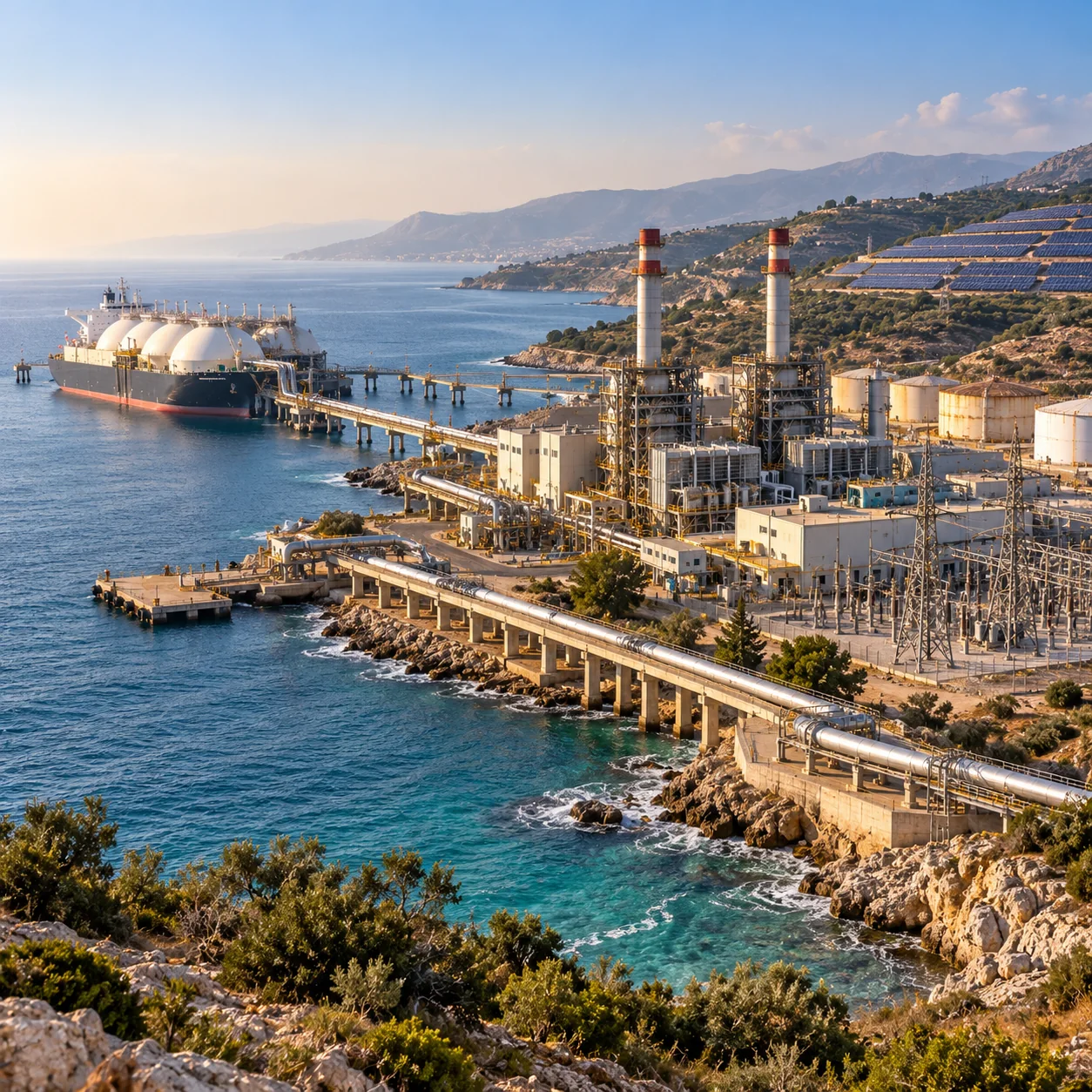
The draft, titled the National Integrated Energy Investment Program, places the two gas plants at Deir Ammar in the north and Zahrani in the south, according to the Reuters account.
The more important detail is how those plants would be fed.
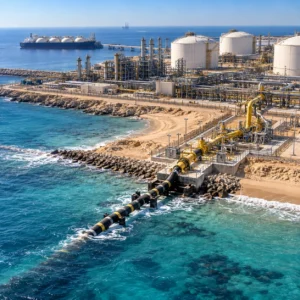
The program describes two separate gas routes. A floating storage and regasification unit would supply up to 3.5 million cubic metres per day. The Arab Gas Pipeline through Syria would add 4.5 million cubic metres per day.
Two routes means one failure does not darken the grid.
For a country whose state utility supplies only a few hours of electricity a day, with expensive private diesel generators filling the gap, that redundancy is the core of the design. Power stations are only as reliable as the fuel that reaches them. Until a year ago, AP reported, the state borrowed from the central bank to buy diesel whenever fuel ran out.
QatarEnergy Becomes the Anchor Supplier
A 20 year LNG agreement would give Lebanon something it has rarely had: a long-term, contracted fuel supply from a single large producer.
For QatarEnergy, the logic is equally clear. It adds a new regional buyer on a long tenor, and it ties Qatari gas to power infrastructure that Qatari interests would help finance and build.
The draft says the program “aims to attract private/project financing without upfront Lebanese public-budget capital expenditure,” with payment obligations and guarantees still under negotiation.
Prime Minister Nawaf Salam put it more simply after the October 16 visit. “The Qatari side will fund, implement and activate the project without any cost on the Lebanese state,” he said, according to AP. Salam also said he would soon present electricity sector plans to the Cabinet.
That financing model matters. Electricité du Liban has been one of the largest sources of Lebanon’s public debt, with losses of about $40 billion over decades, AP reported. A plan that does not ask the treasury for upfront capital removes the obstacle that has stalled past reform efforts.
Renewables and Imports Fill Out the System
Gas is the backbone of the program, but not all of it.
The draft includes 800 MW of solar and 440 MW of wind, along with battery storage, according to the Reuters account. As an initial project, QatarEnergy has agreed with TotalEnergies to jointly develop a solar power plant in Lebanon, AP reported, a step the Qatari prime minister described as a major investment that would benefit both the Lebanese economy and the Qatari companies involved.
The plan also provides for power imports from Syria, starting at 300 MW over two separate routes. Qatari conglomerate Power International Holding already holds contracts for 5,000 MW of generation in Syria, Asharq Al-Awsat reported.
Put together, the program reads like a portfolio:
- Two 825 MW combined-cycle plants at existing coastal sites
- A 20 year LNG supply contract with QatarEnergy
- An FSRU and a pipeline route as separate fuel paths
- 800 MW of solar and 440 MW of wind
- Battery storage to firm variable output
- Cross-border imports from Syria starting at 300 MW
Each element covers a weakness in another. That is what energy security looks like in practice.
A Regional Grid Starts to Take Shape
The Lebanese plan also fits a wider pattern. Gulf capital is moving into Levant power systems, and old regional assets such as the Arab Gas Pipeline are being looked at again as working infrastructure rather than relics.
For Lebanon, linking to Syrian generation and pipeline gas spreads risk across more sources. For Qatar, it builds a footprint across neighbouring power markets, from Syrian generation to Lebanese gas plants and solar.
For contractors, equipment suppliers and financiers, the opportunity is significant: new combined-cycle units, an FSRU berth and associated marine works, pipeline rehabilitation, renewable plants, storage and grid upgrades to connect all of it.
Execution Will Decide the Outcome
A person familiar with the matter told Reuters that implementation could take about three years if approvals move quickly.
That is ambitious for a country that has seen many electricity plans announced and few completed.
The difference this time is the combination of a committed fuel supplier, outside financing, and a design that spreads supply across gas, renewables and imports. The open questions are the ones that decide every infrastructure deal: guarantees, tariffs, payment security and government approvals on both sides.
If those are settled, Lebanon could move from rationed hours of electricity to a system that is planned, fuelled and paid for.
Lebanon’s grid has never lacked plans. What it has lacked is fuel, finance and a partner willing to supply both.