Energy security in the Gulf is starting to look like a network problem.
On October 8 in Riyadh, Saudi Arabia and the United Arab Emirates signed a memorandum of understanding to strengthen strategic cooperation in electricity grid interconnection, power trading and cross-border rail connectivity, according to the Qatar News Agency. Saudi Energy Minister Prince Abdulaziz bin Salman signed for the Kingdom, and UAE Minister of Investment Mohamed Hassan Alsuwaidi signed for the Emirates.
Three days later, on October 11, Prince Abdulaziz signed three more energy MoUs with Kuwait, Qatar and Egypt on the sidelines of the 17th International Energy Forum ministerial. The Kuwait agreement covers power grid interconnection and electricity exports. The Qatar agreement opens the door to joint work on oil and gas pipelines.
None of these documents commits capital yet. Together, they show the region’s largest energy producer deliberately building more physical links with its neighbours.
Power Trading Is Moving to the Center of Gulf Cooperation
The Saudi and UAE memorandum is specific about its electricity goals.
Under the agreement, the two countries will establish general principles governing grid interconnection and the exchange and sale of electricity. They will carry out technical, economic and environmental studies of interconnection opportunities, and coordinate with other Gulf Cooperation Council members on expanding the GCC Interconnection Grid under the GCC General Agreement for Grid Interconnection.
That last clause matters.
Bilateral links between two large systems are valuable on their own. Built within the GCC framework, they strengthen a shared regional grid that every member can draw on, whether to cover an outage, balance a heatwave peak or sell surplus generation.
The language has also shifted from emergency support toward commerce. “Exchange and sale of electricity” describes a market, not just a safety net.
Kuwait Adds Exports, Storage and Cyber to the Agenda
The Saudi and Kuwaiti MoU, signed with Kuwait’s Minister of Electricity, Water and Renewable Energy Dr. Subaih Abdulaziz Abdulmohsen Al-Mukhizim, covers a wider technical scope.
According to Saudi Press Agency material carried by Asharq Al-Awsat, it sets a framework for cooperation in:
- Electricity and renewable energy
- Power grid interconnection and electricity exports
- Energy efficiency, energy storage and smart grids
- Digital transformation, innovation, cybersecurity and artificial intelligence
- Localising energy materials, products and services
- Circular Carbon Economy technologies
The inclusion of cybersecurity alongside interconnection is telling. A more connected grid is more resilient to a single plant failure, but it also creates more control points that need protecting. Writing cyber cooperation into the same framework as physical links treats them as one security question, which is the right way to frame it.
Qatar Brings Pipelines and Hydrogen Into Scope
The Saudi and Qatari MoU, signed with Minister of State for Energy Affairs Saad bin Sherida Al-Kaabi, is the broadest of the set.
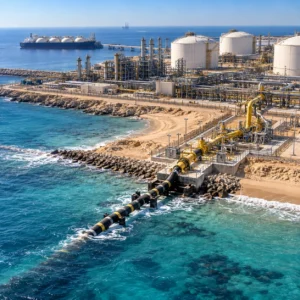
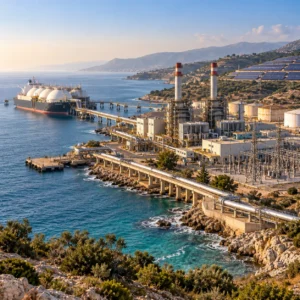
It covers oil and petroleum products, gas and its derivatives, refining, petrochemicals, electricity, clean hydrogen, renewables, energy efficiency and storage. It also provides for the two countries to explore joint projects involving pipelines for the transportation and export of oil and gas, along with infrastructure that supports access to energy.
For two of the world’s most important hydrocarbon exporters, exploring shared transport infrastructure is a meaningful signal. Export routes that rely on a single corridor carry concentrated risk. Additional overland options, even at the study stage, widen the menu.
Rail and Power Are Being Planned Together
The UAE agreement pairs electricity with freight rail, and that pairing is not accidental.
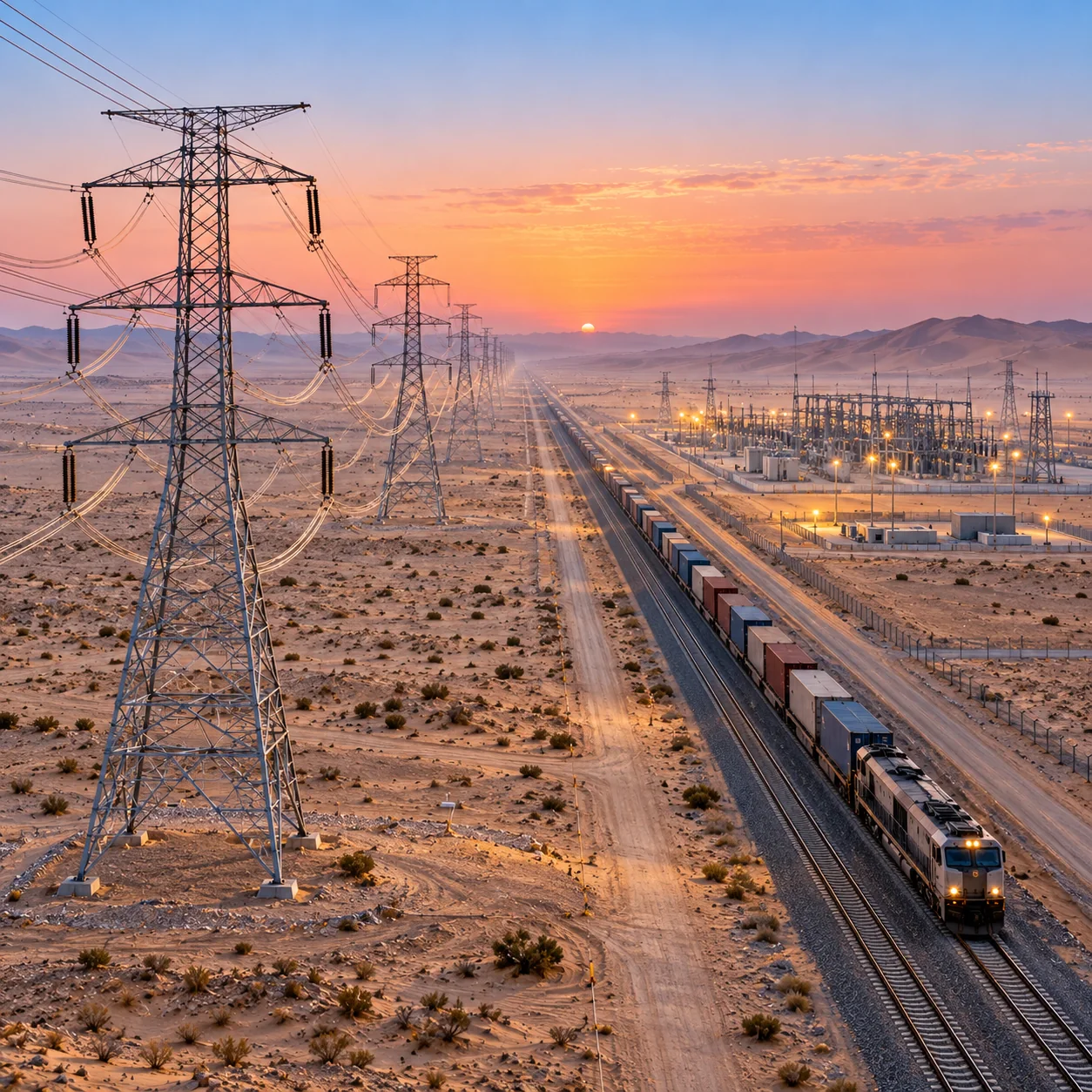
The memorandum sets out general principles for rail connectivity between the two countries and a framework for the two-way transport and transit of goods and freight. According to WAM, the aim is to support logistics integration, improve supply chain efficiency, facilitate cross-border trade and advance regional integration, while enhancing opportunities for infrastructure and energy-sector integration.
Grid lines and rail lines share a lot. Both need long, secured corridors, cross-border permitting and decades of joint operation. Planning them under one agreement can reduce duplicated studies and give both governments a single negotiating track.
It also widens the definition of energy security. A region that can move power, fuel and goods across land borders is less exposed to any one chokepoint.
Riyadh Energy Week Set the Context
The timing reflects the agenda in Riyadh. The IEF17 ministerial opened Riyadh Energy Week, which runs from October 11 to 15, under the theme “Energy Security and Shared Goals in a New Era”, with Saudi Arabia co-hosting alongside Italy and Nigeria. The week also includes the 25th WPC Energy Congress, which Saudi Arabia is hosting for the first time, according to Asharq Al-Awsat.
That backdrop gave the signings a clear message: the Kingdom intends to meet supply security concerns by connecting more of the region’s infrastructure, not less.
From Memoranda to Megawatts
The next phase is where value is created.
Feasibility studies will need to define routes, transfer capacities, pricing rules and operating protocols. Utilities will need commercial agreements for cross-border sales. Transmission developers, engineering firms and equipment suppliers will be watching for the point where studies turn into tenders.
For investors, the signal is a clearer policy direction. Gulf governments are committing, on paper and in public, to grids and corridors that cross borders.
Energy security used to mean having enough supply. Increasingly, it means having enough connections.